
Abbreviations
| Term/Phrase | Abbreviation |
| Adverse event(s) | AE(s) |
| Adverse Events Monitoring System | AEMS |
| Adverse event report(s) | AER(s) |
| American Association of Pro-Life Obstetricians and Gynecologists | AAPLOG |
| American College of Obstetricians and Gynecologists | ACOG |
| American College of Pediatricians | ACPeds |
| Centers for Disease Control and Prevention | CDC |
| Center for Drug Evaluation and Research | CDER |
| Department of Justice | DOJ |
| Elements to Assure Safe Use | ETASU(s) |
| Emergency room | ER |
| Food and Drug Administration | FDA |
| FDA Adverse Event Reporting System | FAERS |
| Gestational age | GA |
| Healthcare provider | HCP |
| Human chorionic gonadotropin | hCG |
| International Classification of Diseases, Tenth Revision | ICD-10 |
| Last menstrual period | LMP |
| National Abortion Federation | NAF |
| National Center for Health Statistics | NCHS |
| Obstetrician(s) and gynecologist(s) | OBGYN(s) |
| Practice bulletin | PB |
| Rh immune globulin | RhIg |
| Risk Evaluation and Mitigation Strategy | REMS |
| Serious adverse event(s) | SAE(s) |
| Society of Family Planning | SFP |
| Society of Obstetricians and Gynecologists of Canada | SOGC |
| Women on Web | WoW |
1. Introduction
Mifepristone is a drug used for induction of abortion, combined with misoprostol. The handling of mifepristone’s initial approval in 2000 has been criticized due to several notable deviations from usual Food and Drug Administration (FDA) drug approval procedures.1 Subsequent regulatory changes have also been highly controversial.2–5 Mifepristone was initially approved with a restricted distribution program (as per 21 CFR 314.5206), and these restrictions were deemed to be an approved Risk Evaluation and Mitigation Strategy (REMS) in 2007. This decision was formally approved and codified by the FDA in 2011 along with the addition of several “Elements to Assure Safe Use” (ETASUs) – medical interventions or actions required prior to prescribing or dispensing mifepristone (for an overview of all ETASU requirements, including those not applied to mifepristone, see Table 1). Mifepristone REMS underwent deregulatory modifications first in 2016 and again in 2023 (Figure 1), steadily reducing oversight requirements. Since these modifications went into effect, mifepristone use has drastically increased,7,8 the proportion of total abortions that are drug-induced has increased,9 and a growing body of research has highlighted the rates and impacts of unwanted and coerced abortion.10–17 Concern over underreporting of mifepristone-related complications has also resulted in calls for the Department of Justice (DOJ) and the Federal Trade Commission (FTC) to investigate mifepristone manufacture, distribution, and marketing, and for the FDA to re-evaluate mifepristone safety data.
Table 1: All ETASU Subtypes (reproduced from154 in table form)
| Element to Assure Safe Use (ETASU) | Requirement |
| ETASU A | Certification or specialized training of HCPs# who prescribe the drug |
| ETASU B | Certification of pharmacies or other dispensers of the drug |
| ETASU C | Dispensing/administration of drug in limited settings e.g., hospitals |
| ETASU D | Dispensing/administration of drug only with evidence of safe-use conditions |
| ETASU E | Each patient using the drug is subject to certain monitoring |
| ETASU F | Enrollment of treated patients in registries |
| # Healthcare Provider | ETASUs in bold are or were previously applicable to mifepristone | |
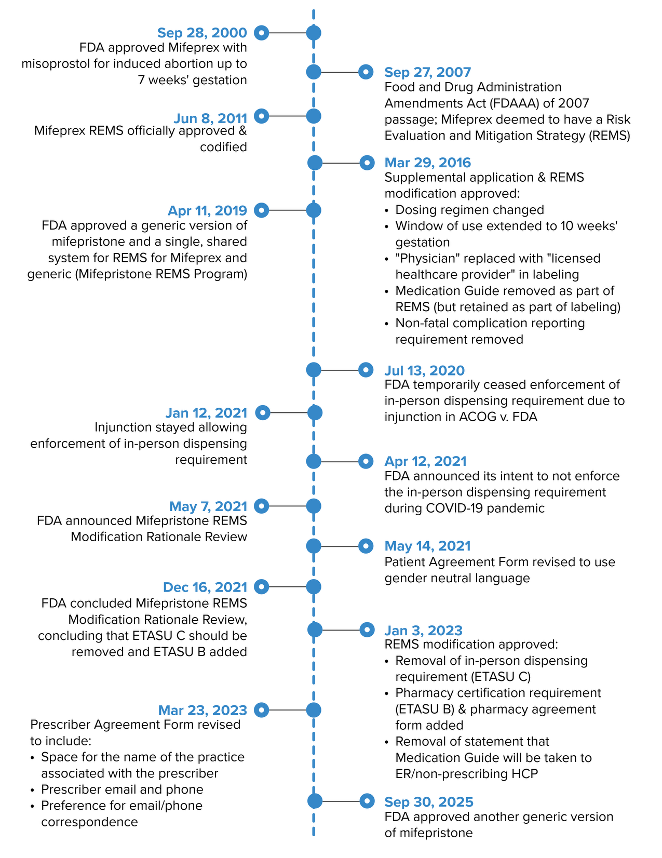
Figure 1. Timeline of mifepristone REMS modifications, 2000–2025.
Over a dozen letters have been sent to these agencies and individuals within them, as well as to mifepristone manufacturers, voicing these concerns,18–30 and recently, this concern was echoed in the memorandum ruling of Louisiana v. FDA:
Indeed, given the information available – and, importantly, the dearth of information upon which FDA previously acted to significantly loosen safety restrictions for prescribing mifepristone – the equities and the public interest weigh heavily in favor of FDA completing the job that the law requires it to do.31
In the most recent deregulatory change, ETASU C, hereafter interchangeably referred to as the “in-person dispensing requirement,” was removed. Although the official removal occurred in 2023, dispensing mifepristone outside the in-person framework had already been permitted before this change. In July of 2020, in a decision responding to the American College of Obstetricians and Gynecologists (ACOG) v.FDA litigation,32 an injunction was granted temporarily halting enforcement of the in-person dispensing requirement. In January 2021, that injunction was stayed;33 however, less than 4 months later, the FDA announced it would exercise enforcement discretion and continue non-enforcement. The FDA, in a 2021 letter to ACOG,34 referenced four studies in defense of this decision.35–38 The next month, the FDA began conducting a full review of the Mifepristone REMS Program39 in connection with the Chelius v. Becerra lawsuit40 (now Purcell v. Kennedy), which ultimately led to the permanent removal of the in-person dispensing requirement in 2023. The four studies referenced in the letter justifying the temporary non-enforcement have been examined previously, and their failure to replicate real-world conditions, undercounting of complications, and other data deficiencies have been highlighted.3 No such analysis has yet been done of the studies cited by the FDA in this 2021 REMS review. This paper seeks to critically evaluate the FDA’s review and the sources cited therein to justify removal of ETASU C, the “in-person dispensing requirement.” As per 21 USC 355-1, an ETASU 1) must assure safe use of the drug; 2) must not be unduly burdensome on patient access to the drug; and 3) must, to the extent practicable, minimize the burden on the health care delivery system.41 As the inclusion of “unduly” and “to the extent practicable” (and the name “elements to assure safe use”) suggest, the requirement to assure safe use is of primary importance. If the removal of an ETASU were to result in conditions of use which are deemed, after review of the evidence, to be safe, then that ETASU could be construed as imposing an undue burden and be removed. If, however, the evidence is unable to demonstrate the safety of those conditions, the burden imposed by the ETASU could not reasonably be concluded to be undue. As such, this analysis will employ an empirical approach to determine whether the evidence utilized by the FDA sufficiently demonstrated that mifepristone use, in the conditions permitted by removal of ETASU C, is safe. Specifically, the external validity of the findings of the studies cited by the FDA will be assessed to determine whether they are generalizable to real world conditions of use, and the suitability and sufficiency of data used by the FDA to supplement its literature review – namely, external stakeholder input and adverse event data – will be assessed to determine their ability to support conclusions of safety.
The sub-aims of the 2021 FDA REMS Modification Rationale Review are first outlined along with discussion of the specific ETASUs now or previously applied to mifepristone. The real-world conditions at play and their permissibility and amplification by the removal of ETASU C are then described, followed by an analysis of the studies referenced by the FDA in this review, with a focus on ways in which study conditions deviate from these real-world, non-study conditions. Unequal handling of input received by the FDA from different external stakeholders is then addressed. The FDA’s analysis of adverse events (AEs) is also examined in light of limitations in abortion complication reporting systems which render these pharmacovigilance data insufficient for drawing conclusions. The clinical implications of the FDA’s decision to remove ETASU C are then described, followed by actionable recommendations to the FDA drawn from the findings of this analysis.
2. The 2021 FDA REMS Modification Rationale Review
The 2021 FDA REMS Modification Rationale Review42 appears in full in the appendix (pages 41-90 of the PDF) of the 2023 CDER Summary Review.43 A full analysis of the 2023 Summary Review is beyond the scope of this article. Page numbers in citations refer to the page(s) of the 2021 REMS review, and do not refer to PDF page numbers of the 2023 Summary Review. The 2021 FDA REMS Review had three sub-aims, each focused on evaluation of an individual ETASU (A, D, & C). The FDA concluded that ETASUs A and D should be maintained, while ETASU C should be removed. ETASU B, a new requirement for pharmacy certification, was added in light of the removal of ETASU C (Table 2). The FDA’s ultimate conclusion, based upon the totality of evidence they assessed, was “that mifepristone will remain safe and effective for medical abortion if the in-person dispensing requirement is removed, provided all the other requirements of the REMS are met, and pharmacy certification is added as described below”.44
Table 2. REMS Review Sub-Aims.
| Review Sub-Aim | Associated ETASU | FDA Decision |
| Evaluate the requirement for healthcare providers who prescribe the drug to be certified in the Mifepristone REMS Program | ETASU A | ETASU A maintained |
| Evaluate the requirement for mifepristone to be dispensed with evidence or other documentation of safe-use conditions | ETASU D | ETASU D maintained |
| Evaluate the requirement for mifepristone to be dispensed only in certain healthcare settings | ETASU C (“in-person dispensing requirement”) | ETASU C removed; ETASU B requirement added (special certification of dispensing pharmacies) |
2.1 Interrelatedness of ETASUs A, D, and C, and Addition of ETASU B
As part of ETASU A, a prescriber must sign the Prescriber Agreement Form, which, among other things, affirms the prescriber’s ability to assess pregnancy duration accurately, diagnose ectopic pregnancy, provide (or make plans to provide through others) surgical intervention in cases of incomplete abortion or severe bleeding, and provide blood transfusions and resuscitation if necessary. The FDA emphatically reaffirmed the importance of these requirements, stating that “[w]e continue to be concerned that absent these provider qualifications, serious and potentially fatal complications associated with medical abortion, including missed ectopic pregnancy and heavy bleeding from incomplete abortion, would not be detected or appropriately managed. [They are] necessary to mitigate the serious risks associated with the use of mifepristone in a regimen with misoprostol.”45 This goes hand-in-hand with the Patient Agreement Form required by ETASU D, which affirms the patient’s understanding of the risks and proper course of action in the event of complications. The FDA acknowledged this interrelatedness in its review, describing the Patient Agreement Form as being “in line with other elements of this REMS, in that it supports the requirement that certified prescribers be able to accurately assess a patient, counsel a patient appropriately and recognize and manage potential complications”.46
ETASU C, in contrast, was not acknowledged as being “in line” with other REMS elements. Despite this, the interrelatedness of ETASU C with ETASUs A and D is evident in its requirement for critically important patient assessment and counseling to occur in person. This ensured that prescribers had ready availability of patient medical and menstrual history (and, in turn, that high-risk women could be adequately identified for pre- and post-abortion testing including ultrasound), that drugs were prescribed and provided to the patients themselves, and that cases of abuse or coercion could be more easily identified. ETASU C was also indirectly related to ETASUs A and D because it limited the number of prescribers, in turn reducing the burden on the FDA to oversee prescribers and ensure they fulfilled their obligations. This indirect point of relatedness is the only one which the FDA acknowledged directly in its review. In discussing the conclusions pertaining to ETASUs A and D, the FDA noted that removal of the in-person dispensing requirement would potentially double the number of mifepristone prescribers. To substantiate this, the FDA cited surveys in which 28%47 and 24%48 of OBGYNs not currently providing mifepristone-induced abortion responded that they would do so if the in-person dispensing requirement were removed. It stated that this provided evidence of the need to maintain ETASU A, “to ensure that providers meet the necessary qualifications and adhere to the guidelines for use”,49 and that it justified maintaining the Patient Agreement Form (as required by ETASU D) as a safe use condition. These conclusions reflect the reality that removal of ETASU C necessarily increased the burden on ETASUs A and D to protect patients. The addition of ETASU B partially addressed this, as it intended to ensure that “pharmacies are aware of and agree to follow applicable REMS requirements, and [ensure] that mifepristone is only dispensed pursuant to prescriptions that are written by certified prescribers”.50 However, ETASU B does not and cannot address other key roles fulfilled by ETASU C and the requirement that patient assessment and counseling take place in person. The importance of this face-to-face interaction and the impact of its removal are highlighted, perhaps most starkly, by present-day cases in which individuals besides the intended user can allegedly order mifepristone and force or coerce women into abortion.16,51 Thus, while the FDA acknowledged the interdependence of ETASU A and D, it did not recognize the full interrelatedness of ETASU C with those REMS elements, and the inadequacy of ETASUs A, B, and D to provide the protections inherently linked to ETASU C.
2.2 Real-World, Non-Study Abortion Conditions
Following the 2021 REMS Review, the FDA’s decision to remove ETASU C necessarily impacted not just women enrolled in research studies, but also women seeking abortion in real-world, non-study conditions. As such, it is important to determine whether the studies that informed these decisions have sufficient external validity such that their findings can be generalized to these conditions. In real-world scenarios, a woman seeking an abortion and her provider may bypass pre-abortion ultrasound and rely instead on last menstrual period (LMP)/menstrual history alone for gestational age (GA) dating. However, many women have irregular menses, conception on contraception can occur, and women often do not recall LMP correctly. As such, it is less accurate than ultrasound and other clinician measurements,52–58 and can result in performance of abortion beyond the FDA’s cutoff of 70 days. Mifepristone-induced abortion at later GA increases the risk for women, including higher rates of failed abortion, post-abortion surgical intervention, and infection.59–62 Even studies cited by the FDA in this review63,64 and the mifepristone label65 demonstrate that complications increase with GA. Not only is ultrasound the gold standard for GA estimation, but it can also identify risk factors or contraindications such as uterine fibroids; septum, molar, ectopic, or multiple pregnancies; or fetal demise.66 Undiagnosed ectopic pregnancy can result in delayed treatment for tubal rupture, catastrophic internal bleeding, or even maternal death.67–70 This is particularly relevant as, according to ACOG, only about half of women experiencing ectopic pregnancy have known risk factors for it.71
FDA-cited studies at times provided pre-abortion ultrasound for all women or women exhibiting risk factors, but in the real world, assessment of GA and risk factors increasingly takes place via online forms without face-to-face interaction with a healthcare provider (HCP). This reduces a remote provider’s access to the woman’s medical history relative to in-person providers or to remote providers involved in a tightly controlled study, plausibly increasing the risk of inaccurate GA dating and missing women at high risk for ectopic pregnancy or other contraindications. While some of the cited studies also assessed patients via online forms, patients have generally been found not to disclose medically relevant information to their clinicians up to 81% of the time,72 which is not necessarily the case in controlled study conditions. Moreover, with the expansion of “advance provision” of mifepristone, a woman may obtain mifepristone before becoming pregnant. Aid Access, a remote prescriber which advertises advance provision of mifepristone on their website,73 reportedly received 48,404 advance provision requests between September 1, 2021 through April 30, 2023.74 It is unknown how many of those requests resulted in an abortion, how many of those abortions were performed outside of the approved 70-day window, or how many complications occurred thereafter. However, by its nature, advance provision increases the time elapsed between pre-abortion testing (if it occurs) and the abortion itself, over which period contraindications might develop, and inaccurate GA estimation or emerging ectopic warning signs could fail to be screened for.
When pre-abortion testing is bypassed, Rh and other laboratory testing is also omitted. Failure to screen for Rh-D negativity and provide Rh immune globulin (RhIg) prophylaxis, if indicated, may lead to alloimmunization – a maternal immune response directed against future unborn children – which can lead to life-threatening complications of severe anemia, brain damage, stillbirth or neonatal death.75–77 There will also be a missed opportunity to perform hemoglobin screening to identify anemic women at risk for transfusion if they should experience significant bleeding, and testing for concomitant sexually transmitted infections, occurring in approximately 5% of women seeking abortion.2,3,5,78 In some FDA-cited studies, all women received standard pre-abortion testing, and in others, women identified via screening as high-risk received indicated testing. As with pre-abortion ultrasound, these are not the conditions at play in the real world, nor the conditions which studies would need to replicate in order to be generalizable. This is partly due to shifting guidance on Rh testing and Rh D immunoglobulin administration from ACOG and other professional groups. For example, as of 2020, ACOG recommended that “[i]n situations where Rh testing and Rh D immunoglobulin administration are not available or would significantly delay medication abortion, shared decision making is recommended so that patients can make an informed choice about their care”.79 Such relatively vague guidance increases the likelihood that Rh testing is bypassed not because it is not indicated, but because it would delay the abortion. This likelihood is amplified in the context of remote prescribing and dispensing, where the need to locate an in-person healthcare provider capable of administering testing necessarily increases the delay incurred. Furthermore, just as limited access to patient medical history and screening via online forms increases the likelihood that a high-risk woman is not provided an indicated pre-abortion ultrasound, they also increase the likelihood that high-risk women do not receive indicated pre-abortion Rh or laboratory testing.
Post-abortion follow-up may also be bypassed in the real world, as the FDA removed this requirement in 2016 (Figure 1). In fact, despite consistently framing this post-abortion follow-up visit as “very important,” the FDA has over time shifted the onus from the provider to the patient even before removing the requirement (Supplemental Table 1). When it occurs, post-abortion follow-up might typically include ultrasound confirmation of abortion completion and/or laboratory tests, including a urine pregnancy test. Due to the nature of research studies and the desire to obtain follow-up information for results reporting, such follow-up was at times provided in FDA-cited studies. However, due to limitations imposed by remote prescribing and dispensing, this is not the case in real-world, non-study conditions. In the event where post-abortion ultrasound is indicated, regulations restricting practicing medicine outside of the state of registration could prevent a remote prescriber from ordering an ultrasound or follow-up treatment (see for example80). Compounding this, some abortion providers have in numerous instances advised women that they are not required to disclose that they have had an abortion when visiting an emergency room (ER) with complications or have even instructed women to tell the ER/HCP that they have had a miscarriage or a pregnancy loss (Supplemental Document 1). This, combined with the removal of the requirement that a woman take the Medication Guide with her to the ER for post-abortion complications (a change which went into place after the 2021 REMS Review, see Figure 1), has increased the likelihood that abortion complications may be misreported as miscarriage related. In fact, one recent analysis found that over 80% of documented mifepristone-induced abortion complications treated in the ER in the Medicaid population from 2016-2021 were miscoded as being related to a natural pregnancy loss.81
As provision of pre-abortion testing and post-abortion follow-up are not specifically required of an abortion provider, there is no standard protocol in real-world abortion procedures. Instead, abortion providers are able to choose which tests are administered and which are bypassed based on logistical considerations and personal preference. Factors outlined above – many of which have been introduced or amplified by the removal of ETASU C – increase the likelihood that these tests are entirely omitted. This again reflects the interdependence of REMS elements, as providers risk failing to fulfill their obligations set forth in ETASU A and risk failing to provide true informed consent as intended by ETASU D by omitting this testing. The removal of ETASU C has also heightened the possibility that pre- and post-abortion testing will be bypassed in distribution methods investigated by the FDA. Therefore, any bona fide analysis of the safety of dispensing via those methods would need to consider these conditions of use. As will be shown, however, the conditions present in FDA-cited sources often included some form of pre-abortion testing and/or post-abortion follow-up, limiting the ability to generalize study findings to real-world, non-study conditions.
2.2.1 “Real-World” Conditions vs. “Telemedicine” and “No-Test” Abortion Conditions.
Importantly, what are described here as “real-world” abortion conditions differ in certain regards from contexts often described as “telemedicine” or “no-test” abortion. These terms are at times, though not always, used interchangeably. In the ACOG guidance referenced in the 2021 REMS Review,79 several studies are cited regarding telemedicine medication abortion, which help illustrate some of these key differences. In Grossman et al., 2017, Grossman et al., 2011, and Kohn et al., 2019, women often received substantial in-person pre-abortion evaluation (including ultrasound) and post-abortion follow-up (sometimes including ultrasound).82–84 Additionally, while drug prescription did not always occur in-person, it still involved virtual consultation, as opposed to online forms. It is also worth briefly highlighting that neither Grossman 2017 nor Kohn 2019 were referenced in the 2021 REMS Review, suggesting an incomplete literature search strategy.
In contrast, “real-world” conditions, to summarize what is outlined above, are conditions of use permitted through the removal of ETASU C in which a woman can be remotely prescribed and receive mifepristone after medical history and contraindications are screened by completion of an online form with no direct face-to-face interaction with the provider, and in which pre-abortion testing and post-abortion follow-up are able to be entirely bypassed (or at best are more difficult to accomplish). Notably, the American Association of Pro-Life OBGYNs (AAPLOG) has recently documented the ability to proceed through Aid Access screening with the presence of numerous contraindications,85 and Live Action has previously reported the ability to order abortion drugs from both Aid Access and AbortionRx.com without identity verification.86 However, a peer-reviewed study and/or an FDA investigation into these topics are needed to rigorously corroborate these anecdotal pieces of evidence.
“No-test” abortion, when not used interchangeably with “telemedicine/telehealth” abortion, more closely approximates what are described here as “real-world” conditions. In “no-test” conditions, pre-abortion testing is omitted for women without contraindications; those with contraindications may or may not receive appropriate testing prior to receiving abortion drugs, and abortion care is at times provided asynchronously. Research on “no-test” abortion published post-removal of ETASU C, however, at times still includes some form of telehealth consulting or evaluation,87–89 and as such suffers similar (though perhaps not as extensive) external validity limitations as FDA-cited studies analyzed below. There are some “no-test” abortion studies, though, which more closely mirror “real-world” conditions of use. Upadhyay, et al., 202490 and Aiken, et al., 2022,91 for example, both investigate asynchronous abortion care. Complication rates reported in these particular studies are low, but a more comprehensive assessment of the evidence base would be required before conclusions about safety could be drawn. Regardless, these studies are more reflective of real-world conditions because asynchronous abortion care is a closer parallel to pre-abortion assessment taking place via online forms, and the relatively high loss-to-follow-up (LTFU) rates of these studies (26% and 30%, respectively) are also, despite constituting study limitations, reflective of real-world conditions in which post-abortion follow-up can be bypassed. The studies cited by the FDA in the 2021 REMS Review, however, were not reflective of these conditions.
2.3 Analysis of Studies Cited in the 2021 REMS Review
To identify the studies that went on to be cited in the 2021 REMS Review, the FDA conducted a literature review in PubMed and Embase using the search terms “medical abortion” and “mifepristone” and “pregnancy termination and mifepristone,” restricted to the period between March 29, 2016 – July 26, 2021. It supplemented these literature review results with references provided by external stakeholders, resulting in the inclusion of 23 peer-reviewed articles in their review. Four of these studies have already been critically analyzed,3 but a similar analysis has not been done for other studies cited in this review. In total, fifteen studies investigated various methods of distribution, and the FDA grouped them by method:
• Retail pharmacies
• Mail-order pharmacies
• Clinic dispensing by mail
• Clinic dispensing by courier
• Partner organization dispensing
Different situational, circumstantial, and relational factors across methods justify independently assessing the safety (or lack thereof) of dispensing abortion drugs in each context. However, nearly all of the studies cited by the FDA in the 2021 REMS Review deviated from the “real-world” conditions outlined above and therefore fail to sufficiently demonstrate safety in this context.
2.3.1 Retail Pharmacies.
In regard to retail pharmacies, the FDA concluded that “[n]one of the three studies described…allow a determination regarding differences in safety between in-person dispensing by a certified prescriber in a health care setting and dispensing through a retail pharmacy, due to limitations on the generalizability of the studies to the current retail pharmacy environment in the US”.92 This approximates an acknowledgment of non-replication of real-world conditions, but several aspects of the cited studies rendering them non-generalizable to these conditions were either minimally addressed or completely unacknowledged:
• Grossman et al., 202193: All participants had already been evaluated by ultrasound and counseled in clinic.
• Rocca et al., 201894: All women were evaluated by pre-abortion pelvic exam and received in-person abortion counseling. Nurse-midwives were uncomfortable omitting GA evaluation by pelvic exam, despite authors originally planning for pharmacy providers to rely on menstrual history alone.
• Wiebe et al., 202095: Women had a telemedicine visit with the provider where menstrual history was used to determine if ultrasound was necessary to confirm GA. 18.1% of the telemedicine group received pre-abortion ultrasound, and 90.6% of the telemedicine group underwent pre-abortion Rh testing. 17% of the telemedicine group were found to be Rh-negative, 18 of whom received anti-D immunoglobulin.
The concerns of nurse-midwives in Rocca, et al. are particularly noteworthy, as they suggest that this study would have been more generalizable to real-world conditions had the medical practitioners disregarded their concerns for patient safety. The proportions of women in the telemedicine group of Wiebe, et al. who underwent ultrasound evaluation and/or Rh testing are also striking, as they suggest that prescribers were concerned about inaccurate GA dating in nearly one in five women and that nearly all women were screened for Rh negativity. Notably, the authors did not stratify complication data by receipt of pre-abortion testing, making it unclear even in these conditions whether its omission was safe. They do, however, note that “[f]inding anti-D for Rh negative women was sometimes a challenge”,95 reflecting the difficulty in its provision in telemedicine contexts. This difficulty may incentivize non-provision in real-world conditions on the basis of delayed abortion, as per ACOG’s guidance.79
2.3.2 Mail-Order Pharmacies & Clinic Dispensing by Mail.
Regarding mail-order pharmacies and clinic-dispensing by mail, the FDA concluded that “dispensing mifepristone by mail from the clinic or from a mail order pharmacy does not appear to jeopardize the efficacy of medical abortion,” but that “[t]he studies we reviewed are not adequate on their own to establish the safety of the model of dispensing mifepristone by mail.”44 Several aspects of these studies evidence non-replication of real-world conditions:
• Grossman et al. 2022 (cited in the 2021 REMS Review as Grossman et al., 2021 due to early online publication)63: Pre-abortion testing and post-abortion follow-up varied by site, but for some clinics included pre-abortion hCG measurements, pre-abortion physical exam or ultrasound, post-abortion ultrasound, and/or post-abortion hCG measurements.
• Upadhyay et al., 202196: 57.4% of women underwent Rh testing, and 17% of women had pre-abortion ultrasound.
• Hyland et al., 201897: All women were screened by telephone and referred for pre-abortion ultrasound and hemoglobin, blood type, and hCG tests. Rh-negative patients received RhIg. Post-abortion follow-up included serum hCG measurements. Women with contraindications were excluded.
In addition to these deviations, none of these studies stratified complication data by presence of pre- or post-abortion follow-up, preventing conclusions from being drawn regarding the safety of their omission in these contexts. The proportions of women screened and/or excluded from these studies are striking. 10.6% of women assessed for eligibility in Grossman were deemed ineligible for a variety of reasons (including ineligibility according to mifepristone labeling and/or higher-than-appropriate GA).63 17% of the study population in Upadhyay received a pre-abortion ultrasound (and the majority of women were Rh tested).96 28% of registrants in Hyland withdrew from the screening process prior to mifepristone being mailed, and while most women did not report a reason for withdrawal, authors note that 7 had a GA >63 days, some women decided to “have an abortion elsewhere,” and “[a] few had suspected ectopic or molar pregnancies”.97 As outlined above, it is plausible that screening via online form (in a real-world, non-study context), unavailability of medical records to remote prescribers, and other factors would increase the likelihood that women such as these for whom mifepristone-induced abortion is contraindicated or for whom pre-abortion testing is indicated are not identified. Studies cited regarding clinic dispensing by mail also deviate from “real-world” conditions:
• Raymond et al., 201998: Nearly all women underwent pre-abortion ultrasound and Rh typing. Most women who followed up had post-abortion ultrasound or serum hCG confirmation of abortion outcome. At least one clinic excluded Rh-negative women.
• Chong et al., 202135: Women were required to obtain pre-abortion ultrasound (including 48% of women obtaining an abortion during the COVID-19 pandemic) or pelvic exam. Women with suspected ectopic or nonviable pregnancy were excluded. Abortion outcome was evaluated at least in some cases by ultrasound, pelvic exam, and/or serum hCG test.
• Anger et al., 202199: Ultrasound was only deemed unnecessary if a woman had no symptoms or risk factors for ectopic pregnancy. Screening criteria were not uniform between sites but were largely based on a commentary piece framed by authors as “clinical guidelines”.100
• Kerestes et al., 202136: Only one cohort in this study, the “Telemedicine + Mail (non-TelAbortion Project)” group (n=4), approximated real-world conditions. Women with risk factors or symptoms of ectopic pregnancy could not forgo ultrasound.
Unlike some of the above studies, Anger et al. reported outcomes by presence of pre-abortion ultrasound. The FDA acknowledged this, noting that “[their] comparative analysis suggests a pre-abortion examination may decrease the occurrence of procedural intervention and decrease the number of unplanned visits for postabortion care”.101 Additionally, like Wiebe et al., Raymond et al. did not stratify complication data by presence of testing but noted that “[c]onnecting people with local sources of Rh immune globulin is also problematic”.98 This again reflects the potential inclination towards non-provision in real-world conditions on the basis of delayed abortion, as per ACOG’s guidance.79
These four studies are among those which the FDA concluded “are not adequate on their own to establish the safety of the model of dispensing mifepristone by mail”.44 But they also concluded that “[t]aken together, [these four studies] support dispensing mifepristone and misoprostol by mail after a telemedicine visit”102 and that “despite the limitations noted, [Raymond, Chong, Anger, Kerestes, & Aiken] support that dispensing by mail is safe and effective”.101 The points outlined above are consistent with the FDA’s conclusion of inadequacy but are not consistent with their ultimate conclusion of safety.
2.3.3 Clinic Dispensing by Courier.
Only one study was cited regarding clinic dispensing by courier, but briefly:
• Reynolds-Wright et al., 202138: 21.3% of included women received a pre-abortion ultrasound due to uncertain gestation or for confirmation of intrauterine pregnancy. 9.9% of women received a post-abortion ultrasound.
The FDA notes that “this study does not provide abortion outcomes separately for couriered delivery of mifepristone and misoprostol”.101 It also did not stratify complication data by presence of pre- or post-abortion testing, besides noting that there was one ectopic pregnancy in a woman who received pre-abortion ultrasound.
2.3.4 Partner Organization Dispensing.
The three studies cited regarding partner organization dispensing reported Women on Web (WoW) outcomes. Of those investigated, this distribution method most closely resembles real-world abortion conditions, as it necessitates neither pre-abortion testing nor post-abortion follow-up, particularly in the event that women do not disclose contraindications in online forms. One point of deviation from real-world conditions is worth briefly noting:
• Aiken et al., 2017103: 58% of women in the study received an ultrasound to confirm GA. Complication data were not stratified by presence of pre- or post-abortion testing.
The FDA discredits this study and the other two WoW studies – Endler et al., 201964 and Norten et al., 2022 (cited in the REMS Review as Norten, et al., 2021 due to early online publication)104 – stating that data from Aiken are “insufficient to determine the safety of dispensing mifepristone by mail through a partner organization,” that Endler and Norten “do not provide relevant information on mifepristone dispensing by mail, because neither provide meaningful outcomes data for consideration,” and that Norten has a response rate “that is too low for the study to be considered valid”.105 Thus, the few studies with designs more closely replicable of real-world, non-study conditions absent pre- and post-abortion testing do not provide the evidence needed to substantiate conclusions of safety in this context. It should be noted that despite these conclusions, ordering mifepristone via WoW remains a possibility from the United States, including by advance provision.106
In addition to the literature review, external stakeholder input received by the FDA and pharmacovigilance data also underlie the FDA’s conclusions, and as such, these other sources will be examined next.
2.4 External Stakeholder Input
Of the 23 peer-reviewed studies referenced by the FDA, six35,37,47,48,93,97 were sourced from letters sent to the FDA by the Society of Family Planning (SFP)107 and plaintiffs in the Chelius case.108 The FDA also referenced clinical policy guidelines from the National Abortion Federation (NAF)109 and a joint SFP/ACOG practice bulletin.79 A charitable interpretation of the inclusion of these resources, even those by organizations which are “proud to be all about abortion”110 like NAF, would be that the FDA sought insight from relevant stakeholders and incorporated that insight into their review in an unbiased manner. Such an interpretation may underpin recent claims that FDA recommendations have been free of ideological bias.111 However, these claims are undermined by the non-inclusion of parallel input from pro-life stakeholders. Two such notably unrepresented stakeholders are the American Association of Pro-Life Obstetricians and Gynecologists (AAPLOG) and the American College of Pediatricians (ACPeds) who on March 29, 2019, jointly filed a citizen petition requesting that the FDA maintain the REMS and restore and strengthen elements approved in 2000 that were previously removed from the REMS.112 The FDA handled this citizen petition, and the references therein, in a starkly different manner than it handled the letters.
For references included in the letters, the FDA crafted tables presenting inclusion/exclusion rationales for each. It noted that references included in the 2016 clinical review113 were “reviewed in 2016 clinical memo” (or “reviewed in 2016 memo”) and therefore “included in the REMS Review”.114 While these publications were included in the 2016 review, it does not appear that any further analysis has been done in the 2021 REMS Review, and they are not included in the references list. It also acknowledged which references were not captured in that literature review but went on to say that “their results are consistent with the existing safety profile of the approved medical abortion regimen, and therefore, support our current conclusions regarding the REMS”.114 These publications are not included in the references list for the 2021 REMS Review, nor discussed in the body of the review. It is unclear how or to what extent they were assessed. For post-2016 references, the FDA “applied the same criteria as for the literature search”115 and provided either exclusion rationales or denoted that they were included in the REMS Review. The FDA provided no such table for the AAPLOG/ACPeds citizen petition and did not mention it in the 2021 REMS Review, aside from acknowledging receipt in its summary of significant regulatory history.
In lieu of inclusion in the review and inclusion of a rationale table, the FDA sent a formal response letter to AAPLOG/ACPeds on December 16, 2021.116 In this response letter, the FDA addressed several of the references included in the citizen petition. The FDA’s response to one of these studies, Carlsson et al., 2018, is particularly noteworthy. This study was included in the citizen petition because the authors found that “[t]he complication frequency [of mifepristone-induced abortion] was significantly higher among women <7 gestational weeks who had their abortions at home”.117 The FDA did not address this finding in its response letter. It instead presented the authors’ findings regarding all abortions performed prior to 12 weeks, where no significant difference in complication frequency for “at home” or “at the hospital” abortions was seen. It also stated that “[f]or pregnancies less than or equal to 9 gestational weeks, the rates are similar for the ‘at home’ group (10.0 percent) and the ‘at the hospital’ group (9.3 percent)”.118 This, however, is not true. These rates cited by the FDA are for abortions performed between 7+1–9+0 weeks and do not include those performed prior to 7 weeks, which the citizen petition explicitly cited as their concern.
Whether hypothetically equivalent treatment of the citizen petition and the SFP/Chelius letters would have affected how this study or others cited in the petition were addressed, or the conclusions of the review, is unclear. However, even if all citizen petition references would not have met the FDA inclusion criteria, the differential treatment in and of itself is notable. Supplemental Table 2 presents a hypothetical table of peer-reviewed references provided as part of the AAPLOG/ACPeds citizen petition which parallels those provided for the SFP/Chelius letters and presumably would have been included had input been handled equivalently. Hypothetical inclusion/exclusion rationales are based on those provided in the 2021 review and/or the FDA’s response letter. Among the citizen petition references:
• Five were reviewed in the 2016 memo, and as such are inferred to have been hypothetically listed as “References included in the REMS review,” as was the case for such references from the letters, one of which was also among the references of the citizen petition.60
• Numerous pre-2016 references were not captured in the 2016 literature review, and of these, three119–121 were neither captured in the 2016 review nor explicitly addressed in the FDA response letter, leaving it unclear whether they were assessed as part of the 2021 REMS Review.
• Appropriate exclusion criteria were difficult to ascribe for five post-2016 references, including Carlsson et al., 2018.117 For the purpose of creating this table, it was inferred that in the absence of an exclusion rationale, the FDA would have included them in the review. It is possible that other exclusion criteria would have instead been employed.
While this table is hypothetical, it is worth considering how FDA assessment and/or inclusion of these references could have impacted the 2021 REMS Review. ACOG Practice Bulletin 18176 and Society of Obstetricians and Gynaecologists of Canada (SOGC) Guideline 13377 were both cited in the citizen petition but not included in the REMS review. Both pertain to the prevention of Rh D alloimmunization, including in the context of mifepristone-induced abortion. Their hypothetical inclusion was inferred due to them being clinically informed guidelines pertinent to mifepristone-induced abortion during the 70-day window of allowed use. In these guidelines, ACOG states that “Rh D immune globulin should be given to Rh D-negative women who have pregnancy termination, either medical or surgical”76 and SOGC states that “[after] induced abortion during the first 12 weeks of gestation, nonsensitized D-negative women should be given a minimum anti-D of 120 ug”,77 reaffirming the importance of this pre- and post-abortion care. Of note, ACOG PB 181, despite being published prior to ACOG PB 225 (the PB cited in the 2021 REMS Review containing vaguer guidance on Rh testing discussed above), was not replaced by this latter guidance document. ACOG has, however, since published a clinical practice update which updates both of these PBs and states that “[f]or patients at less than 12 0/7 weeks of gestation who are undergoing abortion (managed with uterine aspiration or medication) or experiencing pregnancy loss (spontaneous or managed with uterine aspiration or medication): ACOG suggests forgoing routine Rh testing and RhIg prophylaxis. Although not routinely indicated, Rh testing and RhIg administration can be considered on an individual basis in the context of a shared decision-making discussion about the potential benefits and risks”.122 In-depth analysis of this guidance is beyond the scope of this article, as the 2021 REMS Review preceded its publication, but the same consideration outlined above regarding language such as this increasing the likelihood that Rh testing is not provided applies.
The first two of three studies neither captured by the 2016 review nor addressed in the response letter, Miech et al., 2005121 and Miech et al., 2007,120 discuss the pathophysiology of mifepristone-associated septic shock and the pathopharmacology of mifepristone-associated hemorrhage, respectively. Review articles lacking original safety data such as these were excluded from the 2021 review but were included in the 2016 review. This type of publication was also included in the FDA response letter, and in fact the letter cited a 2019 systematic review published during the date range of the 2021 REMS Review literature search.123 Thus, while it is unclear whether the FDA considered or reviewed these specific articles, it is apparent that it deemed publications of the same format relevant when responding to concerns raised in the citizen petition. The third study that it is unclear whether the FDA assessed is Gary et al., 2006.119 This reference was cited in the citizen petition as evidence of hemorrhage with transfusions being reported to the FDA but is also notable as the authors conclude that “AERs [adverse event reports] relied upon by the FDA to monitor mifepristone’s postmarketing safety are grossly deficient due to extremely poor quality”.119 As pharmacovigilance data in part informed the FDA’s decision to remove ETASU C, the data assessed and limitations in abortion complication reporting systems warrant further discussion.
2.5 Postmarketing Adverse Events
The FDA monitors adverse events through the FDA Adverse Event Reporting System (FAERS). On March 11, 2026, the FDA launched its umbrella AE platform, the Adverse Event Monitoring System (AEMS) which includes FAERS.124 To avoid confusion, “FAERS” will be used in this paper, but it should be noted that the FDA is amidst a change in employed nomenclature. As part of the 2021 REMS Review, the FDA investigated postmarketing AEs reported in FAERS. Only 8 cases reporting adverse events following mifepristone were identified as having been reported from January 27, 2020 – September 30, 2021 (this includes the period during which in-person dispensing requirements were temporarily unenforced). There are several limitations with these data, however, which preclude drawing conclusions from them.125 In addition to the limitations that the FDA notes, FAERS has been shown to significantly underreport abortion-associated AEs,126 and to provide insufficient information to accurately code AE severity.119,127 As opposed to relying solely on FAERS, the FDA supplemented its review with AE summaries and analyses provided by mifepristone manufacturers Danco and GenBioPro. Danco identified 48 AEs from March 29, 2016 – September 30, 2021 (including 3 corresponding to FAERS reports), and GenBioPro identified 7 AEs from April 11, 2019 – September 30, 2021 (including 4 corresponding to FAERS reports). The FDA concluded based on these findings that “there does not appear to be a difference in adverse events between periods when the in-person dispensing requirement was being enforced and periods when the in-person dispensing requirement was not being enforced” and that “mifepristone may be safely used without an in-person dispensing requirement”.128 However, there are other limitations – in addition to those listed above – which impact both FAERS and manufacturer complication reporting systems, which also need to be considered.
Previously, mifepristone prescribers were required to “report any hospitalization, transfusion, or other serious event”129 to the manufacturer, which then regularly reported this information to the FDA. Even with this requirement, complication reporting was limited because certain complications are not considered serious adverse events (SAEs), despite fitting the FDA’s definition.130,131 Incomplete abortion, for example, often necessitates medical or surgical intervention to prevent other outcomes such as infection or hospitalization, meeting the FDA’s definition but not classified as an SAE. In 2016, however, complication reporting became more limited when the FDA modified the Prescriber Agreement Form so that only deaths were required to be reported (Figure 1). As such, the manufacturers’ – and in turn the FDA’s – awareness of non-lethal mifepristone-induced abortion complications were significantly hampered. Removing this requirement increased reliance on voluntary reporting of non-lethal complications to manufacturers or to FAERS. However, voluntary FAERS submissions vary in the comprehensiveness and usefulness of the information included. Most notably, several clinically relevant details which are included in manufacturers’ mandatory submissions are not required in voluntary submissions, such as product dosage, patient medical history, and case narratives.132,133 Compounding these issues, clinicians have characterized reporting systems such as FAERS as unsuitable for capturing the complex nature of adverse events and are already inclined not to use them.134
Many of these limitations apply broadly to drug-related complication reporting systems and their impacts expand beyond mifepristone. Complication underreporting has long been acknowledged as a widespread issue, and voluntary reporting systems are particularly vulnerable to underreporting. In fact, it is estimated that adverse events go unreported to these systems more than 90% of the time.135 Neither FAERS nor manufacturer abortion complication reporting systems are impervious to these problems, and these overarching limitations alone render the AE data reviewed by the FDA inadequate to substantiate the decision to remove ETASU C or the FDA’s conclusion of safety. They are also amplified, however, by the surrounding context in which abortion providers have been documented encouraging patient misreporting of abortion complications as being related to miscarriage (Supplemental Document 1). Thus, even if an ER is inclined to report an abortion-related complication, whether directly to FAERS or to the manufacturer, they cannot do so under the belief that it was miscarriage-related. This appears to be reflected in the findings of Studnicki, et al., 2025, discussed above, in which over 80% of documented mifepristone-induced abortion complications in the Medicaid population treated in the ER from 2016 to 2021 were found to be miscoded as being miscarriage-related.81
2.6 Evidence Used to Justify Removal of ETASU C: Summary
To summarize, the FDA analyzed studies to ascertain the safety and efficacy of mifepristone dispensed in a variety of contexts. These studies do not demonstrate the safety of omitting pre- or post-abortion testing in these contexts due to non-stratification of complication data by the presence or absence of testing. Further, by the FDA’s own admission, they cannot even demonstrate the safety of mifepristone distribution by any of the examined methods, as illustrated by their statements presented above. These studies also do not demonstrate the safety of abortion provided in real-world, non-study contexts which deviate from the conditions of these studies and will frequently omit pre-abortion testing and post-abortion follow-up entirely. This fundamentally precludes drawing valid conclusions about safety in these real-world conditions from these studies. Reflective of this, the FDA stated itself in its review that “[t]he ability to generalize the results of these studies to the US population is hampered by differences in pre-abortion care (e.g., telemedicine versus in-person, testing), and the usefulness of the studies is limited in some instances by small sample sizes and lack of follow-up information on outcomes with regard to both safety and efficacy”.136Inclusion of references from external stakeholders and pharmacovigilance data indeed supplemented literature search results, but the way stakeholder input was handled casts doubt on an unbiased approach and the sources of AE data cast doubt on their ability to adequately inform the FDA’s conclusions due to several overarching limitations in abortion complication reporting systems. Collectively, these limitations highlight the inability of the evidence used by the FDA to substantiate its ultimate conclusion to remove ETASU C or to establish the safety of mifepristone dispensing either via the investigated distribution methods or in real-world conditions of use.
2.7 Clinical Implications of Removing ETASU C
Several clinical implications of the removal of ETASU C have already been mentioned, such as the plausibly increased omission of pre- and post-abortion testing, and lack of in-person assessment and associated reductions in a provider’s ability to provide informed consent counseling or identify cases of coerced or unwanted abortion. This decision also has other clinical implications. Compounding the risks of omitting pre-abortion ultrasound outlined above, ultrasound viewing, at least among women less certain of their decision to abort, has been shown to be associated with a decision to continue pregnancy.137,138 This heightens the informed consent implications of its omission and adds to existing concerns expressed over the lack of pre-and post-abortion testing.78,127,139
The removal of ETASU C was also associated with a drastic increase in mifepristone use, and specifically with an increase in prescriptions filled at mail-order pharmacies.7,8 Such medically under-supervised use of mifepristone is understood as having the potential to “predispose to toxicity for both the mother and the fetus”.140 Mifepristone-induced abortion has also been shown to result in higher rates of adverse events and complications than surgical abortion, both within and beyond the FDA’s 70-day cutoff. A large 2009 records-linkage study of 42,619 abortions in Finland found a fourfold higher rate of adverse events following mifepristone-induced abortion compared to surgical abortion, although the dosage of the drug may have differed from that currently recommended by the FDA and medical and surgical groups differed on certain baseline characteristics (e.g. age, GA at time of abortion, and parity).141 Even if cases of hemorrhage not requiring surgical intervention are not considered, the complication rate following mifepristone-induced abortion in this study would still be ~2.5-fold higher than the rate following surgical abortion. Similarly, a records-linkage analysis of 54,911 abortions financed by California Medicaid also showed a fourfold higher rate of complications treated in emergency rooms and abortion clinics following first-trimester mifepristone-induced versus first-trimester surgical abortion.142 In addition, several studies measuring complications within and beyond the 70 day GA window have found higher rates of severe pain, heavy bleeding or hemorrhage, ongoing pregnancy/failed abortion, incomplete abortion/retained tissue, ectopic pregnancy, and the necessity of additional procedures compared to surgical abortion.69,141,143–150 The authors of Hyland et al., 2018, one of the studies cited in the FDA review, even note that some surgical abortion providers had dissuaded women from opting for mifepristone-induced abortion due to excessive pain and bleeding.97 Several FDA-cited studies more specifically provide evidence of the implications of telemedicine abortion. Telemedicine abortion was associated with elevated rates of unscheduled communications and unplanned clinical encounters post-abortion, emergency department or urgent care visits, blood transfusions, and receipt of antibiotics. Rates of unscheduled communications and unplanned clinical encounters were significantly elevated,95,99 rates of blood transfusions and receipt of antibiotics103 were elevated relative to those in previous large studies of abortions performed in clinic,142,151 and rates of ED/urgent care visits were elevated relative to the mifepristone labeling.35,36,98 While some of these increases were relatively small, complication rate elevation would plausibly be even higher in real-world, non-study conditions, and if confounding factors such as potential complication miscoding were controlled for. The increases in mifepristone use and providers attributable to the removal of ETASU C also amplify pre-existing limitations in abortion complication reporting systems. These limitations predate the removal of ETASU C but reporting systems have not substantially evolved to address them. This has resulted in a situation where already insufficient complication reporting systems are expected to be used for an increasing number of abortions, magnifying issues of underreporting and misreporting.
3. Discussion
The FDA’s 2021 REMS Review had several flaws which hindered its ability to achieve its aims. The addition of ETASU B failed to fully acknowledge the interdependency of ETASU C with ETASUs A and D or address the important roles that ETASU C played. Removal of the in-person dispensing requirement has reduced the likelihood that counseling and informed consent conversations occur in person. Women, even those receiving informed consent in person, already at times express uncertainty or a need for more information pre-abortion,152 and reduction of face-to-face interaction is unlikely to address these deficits. Removal of ETASU C also reduced the likelihood that pre- and post-abortion testing occurs. FDA-cited studies often did not stratify results by presence or absence of this testing. This precludes drawing conclusions from these studies as to whether its omission, which is permitted under current regulations, is safe. Further, when analyzing results which were stratified, the FDA acknowledged that the findings suggest that pre-abortion testing may decrease the rates of unplanned visits for post-abortion care and procedural interventions.101 The FDA appropriately noted that for every distribution method investigated, safety could not be demonstrated based on the cited studies. Nearly all of these cited studies also have numerous deviations in their design and methodology from real-world conditions of use and safety can similarly not be demonstrated for real-world conditions due to these deviations. This reflects significant limitations in the evidence base the FDA relied on for its review. Soliciting input from external stakeholders and reviewing pharmacovigilance data, in theory, reduces these limits and expands the evidence base, but as described, each of these other evidence bases employed by the FDA had its own flaws.
Input from external stakeholders was differentially handled, with input from pro-life stakeholders being disproportionately underutilized and underacknowledged, casting doubt on an unbiased inclusion strategy. Further, review of the FDA’s response letter to AAPLOG/ACPeds (and particularly their handling of Carlsson et al., 2018) reveals improper addressal of concerns and leaves unclear whether three studies not captured by the 2016 review pertaining to infection or hemorrhage119–121 (two serious risks identified on the mifepristone label65) were considered for the present review or at all. Equivalent treatment of input from these different stakeholders is critical not only to avoid perception of bias on the part of the FDA, but also to ensure a comprehensive assessment of the literature, as evidenced by the numerous relevant publications included in the citizen petition but not included in the REMS Review. Similarly, as the FDA included resources from ACOG/SFP/NAF that appear to fall outside of the criteria used for its literature search (even if largely included for discussion of background context), inclusion of resources published by AAPLOG/ACPeds or other pro-life clinical stakeholders could have also helped to balance input and ensure comprehensiveness. Assessment of pharmacovigilance data was plagued by overarching limitations of complication- reporting systems, casting doubt on the validity of these data’s ability to substantiate a conclusion of safety. Under- and non-reporting render FAERS and manufacturer adverse event data incomplete. Even if the non-existence of complication miscoding and misreporting were granted, these systems are not designed to support conclusions of safety from the collected data, particularly in the absence of other sources of complication data. However, there is evidence that suggests the existence of complication miscoding81 and there is evidence that abortion providers encourage misreporting (with some even stating, in the context of whether evidence of an abortion exists, that a woman who took the pills vaginally “must check with [her] finger to make sure that they are dissolved”) (Supplemental Document 1). Thus, limitations of the employed complication reporting systems are magnified, as are the limitations of the evidence base reviewed by the FDA. The FDA’s conclusions and evidence base would have been strengthened by inclusion of other sources of evidence, such as (but not limited to) analysis of insurance databases or hospital records.
The removal of ETASU C has resulted in an environment in which omission of pre-abortion testing and post-abortion follow-up is more likely and permissible, existing limitations in abortion complication reporting are worsened, and access to mifepristone is expanded even to those who may force or coerce women into abortion. The flaws of the 2021 REMS Review combined with the subsequent ramifications of removing the in-person dispensing requirement add to the long list of controversies associated with mifepristone regulation. As such, the FDA should follow through on its pledge to thoroughly review the safety of mifepristone in real-world use; should reinstate ETASU C at least until the review is complete and safety can be demonstrated; should reinstate requirements that non-lethal abortion complications be reported and that the Medication Guide be brought to the ER in the event of post-abortion complications; and should investigate claims of REMS non-adherence, increasing resources dedicated to compliance enforcement and oversight if necessary.
3.1 Strengths and Limitations
This analysis has several strengths, but also limitations which must be considered. One strength is the ability to retrospectively analyze the 2021 REMS Review in the present-day context wherein the “real-world” conditions outlined in the paper have been permitted for several years post-review. This allows consideration of contextual factors such as letters sent to the FDA in the intervening period expressing concern and the Louisiana v. FDA litigation, and incorporates novel findings when particularly relevant. However, this strength is caveated by the limited scope of the article. Because this analysis focuses on the 2021 REMS Review, evidence not available to the FDA at the time is largely out of scope, particularly regarding the evaluation of the specific studies cited in the review. A more thorough review of the literature published after the 2021 REMS Review is needed. Another strength of the analysis is the empirical, external validity standard employed. In performing the REMS Modification Rationale Review, the FDA sought, in part, to determine whether mifepristone would remain safe under conditions permitted by REMS modifications (specifically, removal of ETASU C). The omission of post-abortion follow-up has been permitted since removal of this requirement by the FDA in 2016 (Figure 1). Removal of the in-person dispensing requirement similarly permitted the omission of pre-abortion testing and opened the door to things such as advance provision of mifepristone and screening via online forms. This strength should again be interpreted with the caveat of limited scope. This analysis did not set out to determine the proportion of abortions performed under the “real-world” conditions of use outlined. The magnitude of the implications of non-generalizability of cited studies to these conditions is associated with the frequency with which these conditions are at play. Data from Aid Access suggest that these conditions are not uncommon.74,153 However, it is possible that the proportion of women obtaining abortions in contexts to which the cited studies do not generalize is relatively low. This would not detract, however, from the FDA’s own conclusions that the cited studies do not demonstrate safety in the investigated modes of distribution, and would not detract from the ultimate conclusion of this article that the FDA did not demonstrate safety under conditions permitted by removal of ETASU C. The limitations of studies cited in this analysis as supporting evidence should also be considered. Studnicki et al., 2025 (cited in regard to complication miscoding) relies on the assumption that initial abortions were coded accurately, and that subsequent miscarriage-associated complications were not due to factors such as rapid repeat pregnancy and miscarriage of the latter pregnancy. The short 30-day window employed in this study, however, increases the likelihood that these assumptions are correct.81 Similarly, Upadhyay et al., 2015 (cited in regard to complication rates) assumes accurate ER and office coding of abortion complications. However, as the authors note, clinical reviewers examined related billing records in this study, reducing the likelihood of confounding miscoding.142 Other studies relied upon in this analysis are each also subject to their own limitations and should be interpreted with those limitations in mind. Importantly, while this analysis shows that the FDA failed to demonstrate the safety of removing ETASU C, this analysis cannot, and does not intend to draw conclusions regarding whether harm was caused by the removal of ETASU C. This question is beyond the scope of the present article.
4. Actionable Recommendations
Considering the findings of this critical analysis of the 2021 REMS Review, the FDA should consider several recommendations which would help ensure that women who seek abortion are adequately protected, and that future research and safety reviews are not hindered by inaccurate complication reporting.
• The FDA Commissioner has pledged a new review of mifepristone’s safety, and the FDA has been ordered to provide a status update on this review within six months of the memorandum ruling in Louisiana v. FDA. Given the limited data upon which these REMS modifications were justified as examined above, it is critical that the current safety review obtains as complete and accurate data as possible to document the real-world impacts of the changes. This could include, but is not limited to, analysis of large insurance databases documenting mifepristone abortions. ICD-10 codes appropriate for post-abortion complications would include O04.x and O07.x codes but should also include codes for complications following other types of natural pregnancy loss, as well as non-pregnancy-specific codes for hemorrhage, infection, surgical aspiration and other events that may follow mifepristone abortions, even if the abortion is not known or is miscoded. Abortions should be linked, as accurately as possible, to subsequent events over a certain period (some studies use 30 days or 42 days81,142), to capture actual complication rates. Reviewing hospital records could also supplement this analysis of real-world complication rates. Comparisons should also be made between intervals when different FDA regulations were in effect (e.g. 2000-2016 when mifepristone use was limited to less than seven weeks’ gestation, 2016-2021 when use was limited to less than ten weeks’ gestation, and 2021-today when the in-person dispensing requirement has not been enforced/removed). This type of post-marketing surveillance by the FDA would demonstrate how these label changes have impacted women during real-world use. If the FDA demonstrates increased harm, it should reinstitute its previous REMS requirements in the interest of women’s safety.
• Prior to the completion of the above review, the FDA should reinstate ETASU C, considering the inadequacy of the evidence used to demonstrate the safety of its initial removal. Reinstating ETASU C will ensure that, until a complete review of mifepristone’s safety can be conducted, its absence will not result in unintended risks to women.
• Regardless of the results of the above review, the FDA should reinstate the non-lethal abortion complication reporting requirement. Voluntary reporting results in lower-quality data132,133 and worsens existing issues of complication underreporting.119,126,127,135 The FDA’s identification of only 8 cases in FAERS reporting AEs in its review reflects this. To further address this problem, the FDA should also reinstate the requirement that the Medication Guide be brought to the emergency room if a woman experiences post-abortion complications. This will reduce the likelihood of complication miscoding and provide a more accurate representation of the number of abortion-related complications detected through hospital billing coding.
• Finally, the FDA should thoroughly investigate anecdotal claims that mifepristone has been able to be ordered online without identity verification and in the presence of contraindications (see for example85,86). If this investigation reveals a larger trend, whether in general or for particular providers, the FDA should use enforcement mechanisms at its disposal to revoke REMS certification for non-compliant providers. If necessary, increased resources and funds could be dedicated to audit and oversight mechanisms, as may already be warranted given the increased number of mifepristone prescribers resulting from the removal of ETASU C.47,48
5. Conclusion
The evidence cited by the FDA in the 2021 REMS Modification Rationale Review is insufficient to demonstrate the safety of mifepristone use in any of the investigated modes of distribution or in the real-world conditions of use permitted by the removal of ETASU C. Studies cited by the FDA often did not stratify results by the presence of pre- or post-abortion testing and were often not generalizable to the conditions allowed under current regulations. Sources of evidence that served to supplement the results of the FDA’s literature review, namely external stakeholder input and adverse event data, failed to result in a sufficient assessment. Relevant publications brought to the FDA’s attention by pro-life stakeholders were, at best, handled differently than those provided in letters from other stakeholders and, at worst, inappropriately addressed, or their assessment status was unclear. Pharmacovigilance data were sourced from reporting systems which disproportionately rely on voluntary reporting and are quite possibly confounded by complication misreporting, a phenomenon which some abortion providers make more plausible through their guidance to abortion-seeking women. The FDA rightly concluded that the studies it cited could not demonstrate safety in the investigated modes of distribution and did not provide sufficient evidence to reach their vastly different ultimate conclusion that the in-person dispensing requirement could be safely removed. Reinstatement of ETASU C, at least until a more thorough review of real-world safety is conducted, is warranted, as is reinstatement of non-lethal complication reporting requirements and the requirement for a woman to bring the Medication Guide with her to the ER in the event of post-abortion complications. Inclusion of other sources of evidence that better capture real-world complication rates, such as insurance databases and/or hospital records, would also strengthen future reviews of mifepristone’s safety.
Declarations
Funding. The manuscript received no specific or exclusive funding, but was prepared as part of employment with Charlotte Lozier Institute.
Competing interests. The authors declare no financial conflicts of interest. In accordance with Issues in Law & Medicine’s definition of non-financial competing interest, which includes employment, Z.B.S and I.S. declare affiliation with the Charlotte Lozier Institute. The authors declare no other conflicts of interest.
Author contributions. Conceptualization, Z.B.S. and I.S.; writing—original draft preparation, Z.B.S.; writing—review and editing, Z.B.S. and I.S.; table and figure preparation, Z.B.S. and I.S.; project administration, Z.B.S. All authors have read and agreed to the published version of the manuscript.
Acknowledgments. The authors acknowledge Christine Long for assistance with creation of Figure 1. The authors also acknowledge Cameron Louttit and Ben Cook for reviewing and providing feedback on several drafts of this manuscript.
Ethics approval. Not applicable
Data availability. Not applicable
Editor’s Note. The regulatory environment surrounding mifepristone is rapidly evolving. The analyses and recommendations presented in this manuscript are current as of 09/21/2026.