Introduction
Induced abortion, an intervention intended to terminate a pregnancy so that it does not result in a live birth2, is a common procedure in the United States. While the term ‘abortion’ can be used medically to refer to both induced abortion and spontaneous abortion (i.e., miscarriage), the use of the term ‘abortion’ typically refers to induced abortion. Therefore, in this paper, ‘abortion’ refers to ‘induced abortion’ unless indicated otherwise. It is estimated that between 613,4003 and 1,038,0004 abortions are performed annually in the US alone. The dilation and evacuation procedure (D&E) is performed in the 14th through the 27th week of pregnancy (menstrual age) and is the third most common abortion procedure performed in the United States, with approximately 60,000 cases annually.5 To perform a D&E, the cervix will be dilated over the course of 1-2 days. Cervical dilation is typically accomplished using either osmotic dilators, such as laminaria, or mechanical dilators, such as a balloon catheter. Once dilated, the woman is sedated before a speculum, a tool to hold the vagina open in order to visualize the cervix, is inserted. A tenaculum is then used to grasp the cervix to allow a vacuum cannula to be inserted through the cervix. The vacuum cannula is used to remove the amniotic fluid surrounding the fetus. A grasping forceps is then used to apply traction to the fetal limbs for the purpose of separation and removal of the fetal legs and arms from the fetal torso. The torso is then removed with similar traction by grasping forceps. If the fetal skull is too large to be removed with the torso, the skull is crushed and removed in pieces.6
Prominent descriptions of the D&E procedure may not be sufficient for patients or the public to comprehend the operation. For example, Planned Parenthood, the largest abortion provider in the United States, describes D&E procedures as a “combination of medical tools to remove the pregnancy tissue out of your uterus”,7 but gives little detail that would be useful for fully informed consent. Similarly, the National Abortion Federation uses terms such as “removal of the pregnancy” and “emptying the uterus” that lack specificity.8
Since 96% of biologists agree that fertilization is the moment human life begins, referring to a human fetus as “pregnancy tissue” or omitting descriptions of fetal limb removal withholds important information that patients may reasonably desire when making decisions about medical procedures and may violate the principles of informed consent and thus become a significant issue for patient care.9
An accurate understanding of abortion procedures can also be important for making informed political decisions. Many surveys have been conducted to evaluate people’s positions regarding abortion and the circumstances under which they should be performed.10 The impact information has on a person’s emotions, understanding, and affiliation can aid in understanding pro-life/prochoice rationales. There have been no studies examining how individuals’ perception of abortion changes when educated on the details of abortion procedures or how these perceptions may change in different demographics. The goal of this pilot pre-post intervention survey study was to determine how exposure to the details of a D&E procedure might affect understanding of second trimester abortion, pro-life/pro-choice ideological affiliation, and emotions toward abortion.
Materials and Methods
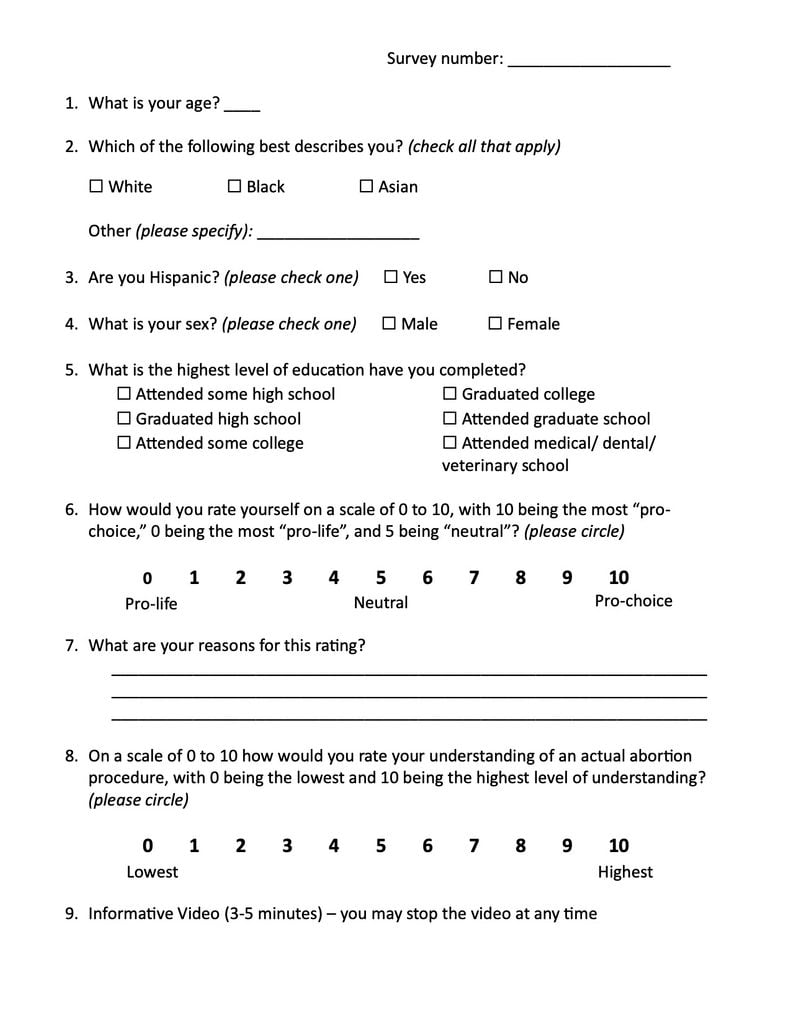
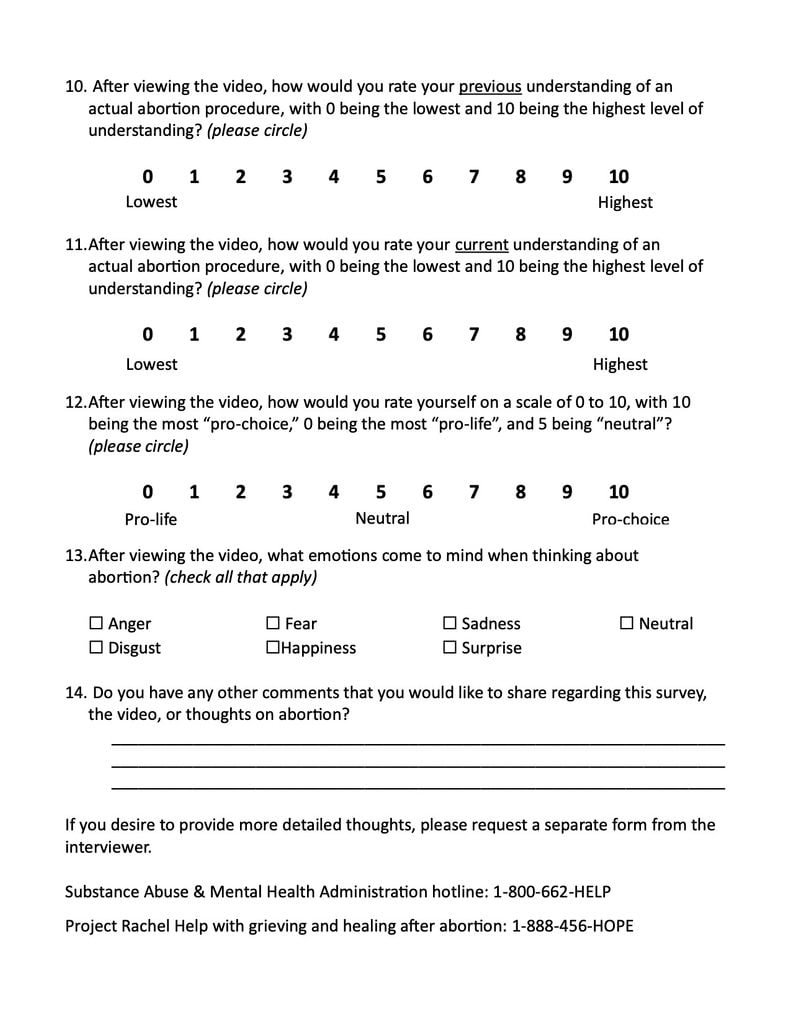
A 14-item survey was created to assess individuals’ understanding of second trimester abortion, pro-life/pro-choice ideological affiliation, and emotions toward abortion before and after watching an animated depiction of a dilation and evacuation abortion procedure.11 Subjects younger than 18 were excluded from the survey. The survey was approved by the Franciscan University of Steubenville Institutional Review Board. Participants were not asked to define abortion or to discuss their personal experience with abortion, and no explicit definition of abortion was provided. All surveys completed in their entirety were included in the analysis. Exclusion criteria for surveys included those that were not fully completed by subjects, or that could not be read or had their data transcribed by the researchers. A total of 50 surveys were collected, and none met the exclusion criteria.
The data were collected using a convenience sample collected in eastern Ohio and western Pennsylvania, a region known as the Ohio Valley (n=50). In pairs, researchers visited houses in select neighborhoods using a prewritten script to minimize the potential for a priming effect. When a potential subject answered a knock, the subject was asked to participate in a study conducted by students at Franciscan University. The researcher conducting the interview was randomly selected for each house. An incentive of free food and drink was offered to all subjects. A consent form was obtained from participants, and both the survey and form were placed in a sealed envelope by the participant. No names or other identifying information were included in the data, and researchers were unable to view or access the surveys until they were sealed in an envelope. The survey consisted of a series of questions using semantic differential scales, affiliation scales, and demographic information, and was divided into two major sections, pre-video and post-video (Fig. S1). Between the two survey sections, participants watched a brief animated video depicting a D&E.12 The only parts of the video that were shown were those depicting the actual procedure. Participants were informed that they could stop the video at any time. Participants were unable to access or view the post-video portion of the survey until the depiction was finished.
Pro-life/pro-choice affiliation was evaluated by self-report on a sliding scale. Subjects were coded as pro-life if they rated themselves from 0 to 3 on the pro-life/pro-choice scale, moderate if they rated themselves 4 to 6, and pro-choice if they rated themselves 7 to 10.
The data were assessed for normality using the Shapiro-Wilk test. Non-parametric data containing two groups of discrete and continuous variables were analyzed using the Mann-Whitney test and the Kruskal-Wallis Test. Continuous nonparametric data were analyzed using dummy-coded multiple regression models. Discrete nonparametric data were analyzed using the Levene Test. Vargha and Delaney’s A,13 ƞ², and Pearson’s correlation coefficient were used to measure the effect size of ordinal data. Parametric data with discrete and continuous variables were analyzed using two-sided t-tests. Parametric data containing continuous variables were analyzed using multiple regression models. Parametric data with two discrete variables were analyzed using ANOVA. Effect sizes for parametric variables were measured using Cohen’s d and Pearson’s correlation coefficient. Effect sizes were interpreted using Cohen’s 1988 heuristic thresholds.14 Vargha and Delaney’s A was interpreted using the heuristic thresholds suggested in their paper. Bimodality of distributions was evaluated using Sarle’s bimodality coefficient15 at a kurtosis of κ3. p-values of less than 0.05 were considered statistically significant. The R software environment and Excel’s native statistical analysis programs were used for all analyses.
Results
The racial composition of survey participants was 80% White, 10% Asian, and 8% Black. 2% of our population was Latino, and 8% said they were Hispanic (Fig. 1). A chi-squared test of goodness of fit showed no differences between the demographic distribution across race and sex in our study compared to the US Census Bureau statistics for the Steubenville-Weirton region (p=0.2646).16
Figure 1. Distribution of Race and Education Level of Subjects (n=50).
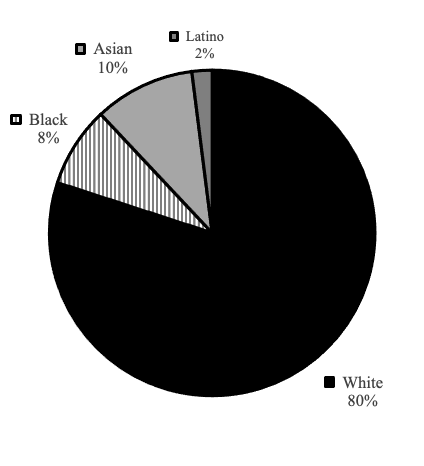
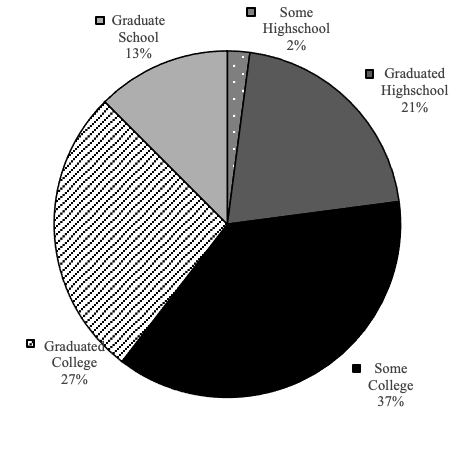
Survey results yielded equal numbers of men (n=25) and women (n=25), with a mean age of 35.17 ±1 8.5 years, and most participants had college-level education (Fig. 1).
Participants’ Perceived Knowledge of Abortion Before and After Video Viewing When asked to rank their understanding of abortion on a 0-10 scale, most participants (84%) perceived themselves to have moderate to high levels (5-10) of understanding of an actual abortion procedure before watching the video. In fact, 16% of participants perceived themselves to have a full understanding of abortion. Males were significantly more likely to harbor higher perceived levels of understanding about abortion than females (p=0.0300, A=0.3456). Regarding participants’ affiliation with abortion, the results were bimodal (BC=0.73), with 38% of respondents selecting 0 (pro-life), and 28% 10 (pro-choice). In the analysis, pro-life and pro-choice individuals were defined as reporting between 0 and 3 and 7 and 10 on the abortion affiliation scale. Among the pro-life cohort, the average abortion affiliation score was 0.34, with a standard deviation of 0.93. Among the pro-choice cohort, the average abortion affiliation score was 9.13, with a standard deviation of 1.25. There was a statistically significant difference (p=0.0044, η2=0.48) in the variances between pro-life affiliation and pro-choice affiliation. Subjects who had received a graduate school level of education were significantly more likely to affiliate with prolife ideology than subjects who had received less education (p=0.0207, A=0.2159). Other demographic factors, like race and age, did not have a significant impact on perceived understanding or abortion affiliation.
Figure 2: Participants’ Perceived Knowledge of Abortion Before and After Video Viewing
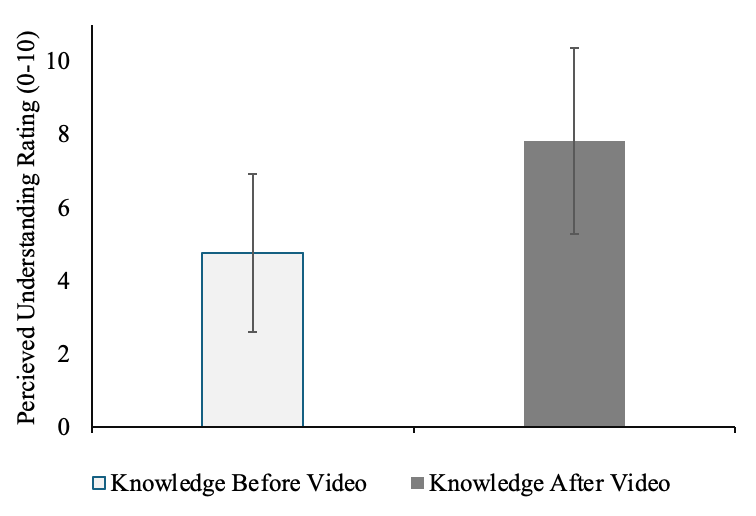
Participants reported their understanding of an actual abortion procedure on a scale of 0 to 10. 10 was the highest. 0 was the lowest.
Watching an animated depiction of a D&E abortion significantly increased perceived understanding of an actual abortion procedure (Fig. 2, p=0.0003, d=0.45), but did not have a statistically significant impact on abortion affiliation (Fig. 3, p=0.42). Increased levels of perceived understanding of abortion before and after watching the animated depiction of a D&E abortion were associated with a decrease in pro-choice views (p=0.0138, r=0.2567).
Figure 3: Affiliation with abortion after watching the abortion video
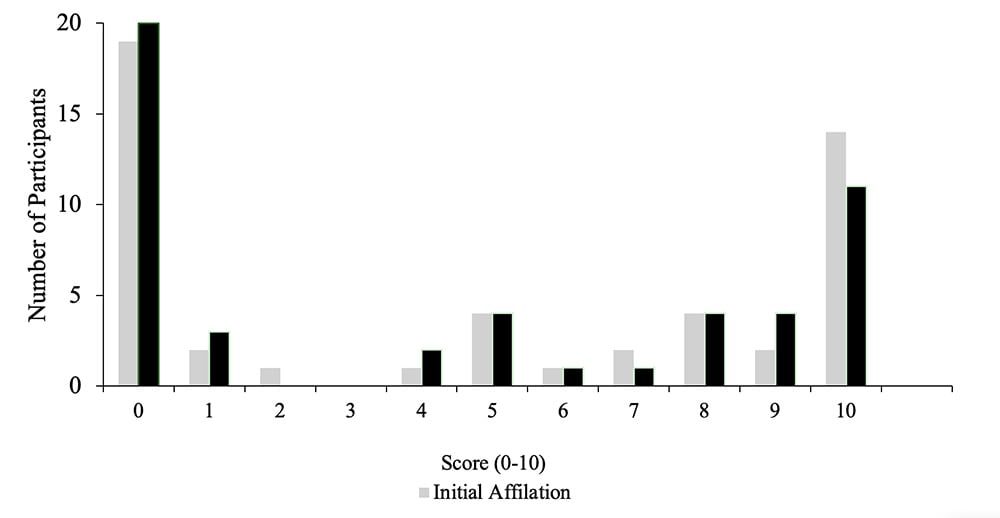
Participants’ pro-life/pro-choice identification on a scale of 0 to 10. 10 was pro-choice. 0 was pro-life.
Participants’ affiliation with abortion was not significantly different after watching the abortion video (Mann-Whitney Wilcoxon, p>0.05).
Figure 4: Number of participants recording basic emotions, grouped by affiliation with abortion according to a self-rating on a 10-point scale.
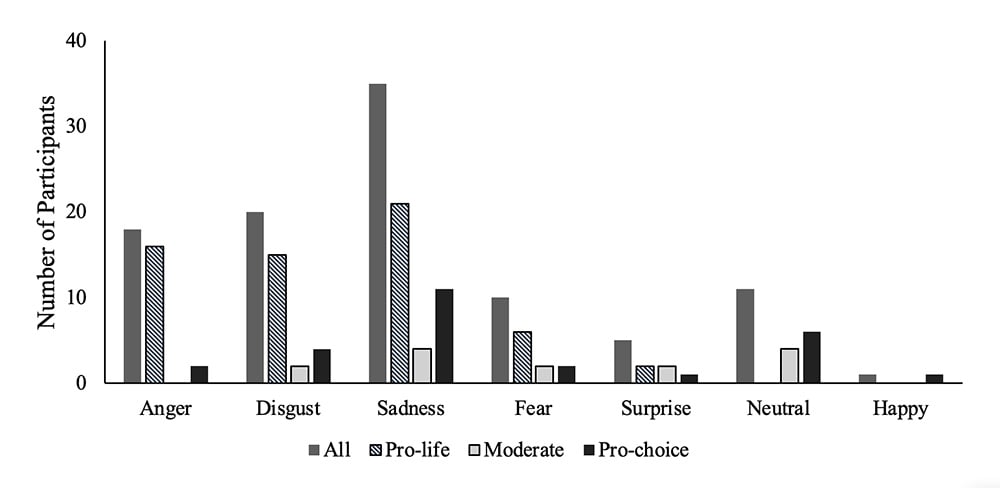
Ratings of 0-3 were categorized as pro-life, 4-6 were moderate, and 7-10 were pro-choice.
Subjects’ feelings about abortion after watching the video were almost entirely negative (Fig. 4). The most common negative feeling was sadness, with 70% of subjects reporting feelings of sadness when thinking about abortion after watching the video, including over 50% of prochoice identifying subjects and over 90% of pro-life identifying subjects. By contrast, 2% of participants reported feelings of happiness.
Subjects were significantly more likely to report negative emotions if they reported higher levels of abortion understanding after watching the video (p=0.0000 r=-0.49), reported a greater increase in understanding (p=0.0000 r=-0.43), or were black (p=0.0008, D=0.5890).
Discussion
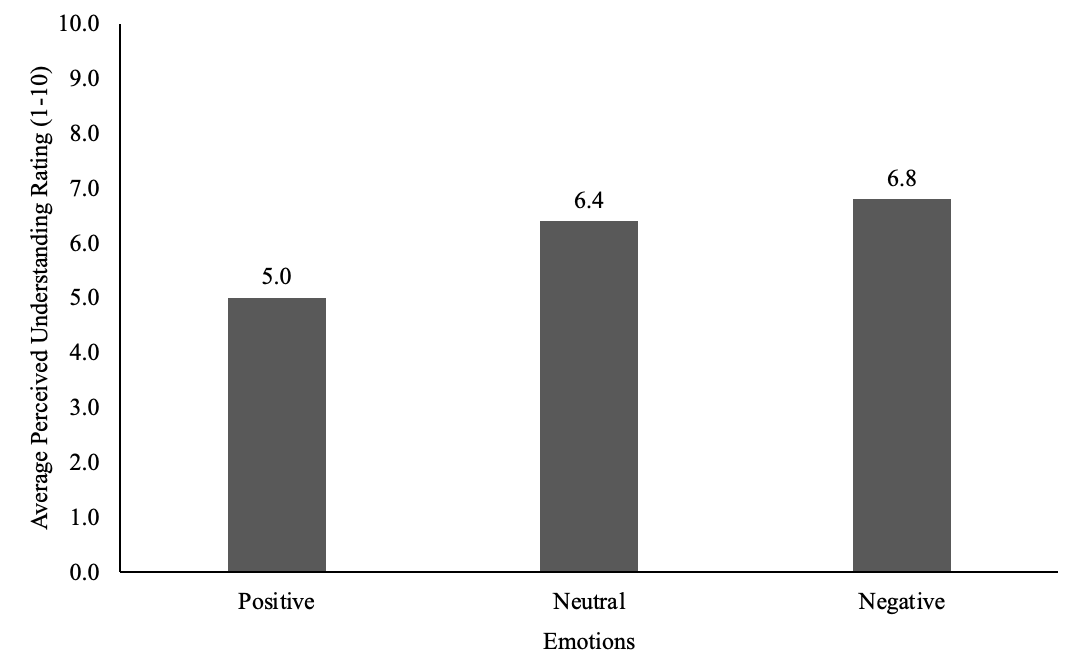
This novel pilot study examines how a person’s ideological affiliation, emotion, and understanding are affected by viewing an animated video on the D&E procedure in a second-trimester abortion. Despite high levels of perceived understanding of abortion, participants generally reported an increase in understanding after watching the animated abortion procedure (Fig. 2). Higher levels of perceived understanding of abortion were associated with higher levels of negative emotion (Fig. 5). This data suggests that most people dislike D&E abortion procedures when they view the details of the D&E procedure. Negative emotion when thinking about abortion was predominant in both pro-life and pro-choice participants (Fig. 4), suggesting that dislike of D&E abortion procedures is not confined to pro-life individuals.
Figure 5: Average perceived understanding rating grouped by participant’s emotion, according to a self-reported scale.
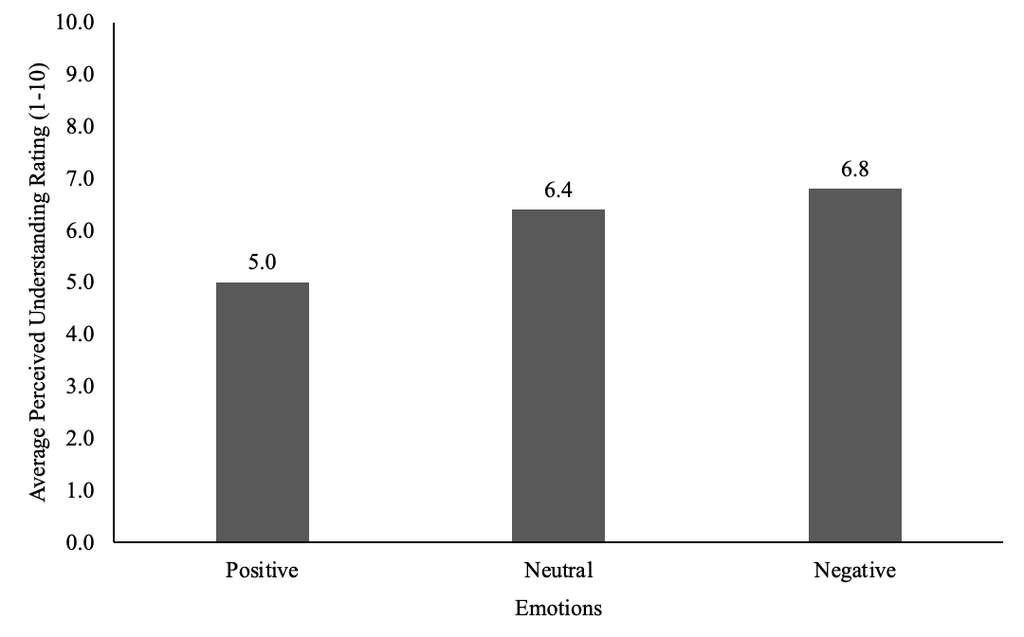
Higher perceived understanding was associated with a greater likelihood of negative emotion (multiple regression, p<0.0001).
In addition, those with a higher perceived understanding of abortion were more likely to have negative opinions about the procedure (Fig. 5). However, the video had no significant impact on short-term abortion affiliation (Fig. 3). It is possible that people do not associate D&E abortion with abortion as a whole. In the surveying process, a few people stated that D&E abortion is uncommon or is one of the worst procedures despite the fact that17 approximately 60,000 D&E abortions are performed annually. Further research would be useful in examining whether participants are against D&E procedures while still supporting abortion as a whole.
Notably, higher levels of perceived understanding were not correlated with changes in affiliation (p<0.001, Fig. 1) but were associated with greater pro-life affiliation. These results, combined with high levels of negative emotion, may suggest that a person’s affiliation with abortion is not based on their emotions or perceived understanding regarding an abortion procedure in the short term. This contradicts the assumption that ideological alignment is predicated on emotional reaction and perceived comprehension. If ideological affiliation was based on emotion, it might be expected that most pro-choice participants would feel positive or neutral emotions after watching the video. If ideological affiliation was based on perceived understanding, it might be expected that a change in understanding would result in a change in affiliation. It is possible that pro-life individuals with a greater understanding of abortion are experiencing prolonged negative emotions about abortion over time. If true, the sustained negative emotions about abortion might promote pro-life affiliation in the long-term, but not in the short-term. Long-term studies of how individuals’ views on abortion evolve, given increased levels of understanding about the procedure, may provide greater insight into these results.
A previous study found that those with higher education levels tend to identify as prochoice.18 However, the results of this experiment showed no correlation between education and affiliation. In fact, those who had received a graduate-level education or more tended towards prolife identification (p=0.0207). This discrepancy could be explained if educational institutions in this region provide students with more education about the abortion procedure, more pro-life arguments, or fewer pro-choice arguments in general and may reflect regional differences in education about abortion.
Pro-life identifying subjects were more likely to identify as 0, which is fully pro-life, compared to how likely pro-choice subjects were to identify as 10, fully pro-choice, on the abortion affiliation (p=0.044). This suggests pro-life individuals may be less willing to change their beliefs about abortion compared to pro-choice individuals, or perhaps that they are more confident in their beliefs, given their statistically higher levels of knowledge.
Strengths
Our study has several strengths. While in-person interviewing could expose the study to priming effects, these effects were mitigated by randomly assigning survey administrators within the research group and following a script. Furthermore, participants were informed that the survey was being conducted by students from Franciscan University, which may suggest a pro-life affiliation among participants and introduce social desirability bias. The risk of bias was limited by researchers avoiding communicating any views on abortion in their interactions with subjects. No control group was employed in the study design, which prevents us from concluding the D&E procedure video was the sole cause of the negative emotional response. Covariates, such as the at-home study environment or viewing of any graphic medical procedure, may have contributed to the observed increase in negative emotion. Strengths of the in-person survey, as opposed to online, include the guarantee that every participant is human (e.g., not a bot), completes the survey only once, and watches the video to completion. Another strength of the in-person survey is that the subject can ask clarifying questions, which can reduce errors.
Limitations
A weakness of this study is the geographical restriction of the sample population to the Ohio Valley, which makes it difficult to generalize the results to a wider geographic area. Post hoc power analysis revealed that, with the detected effect size of 0.45 in the bivariate analysis, the study’s statistical power was approximately 0.93. Results with effect sizes smaller than this were likely underpowered for the study design. These strengths and the mitigation of the weaknesses support the significance of our results.
Conclusions
The results of this pilot study suggest that watching an animated depiction of a D&E abortion is likely to induce negative emotion and increase a person’s understanding of abortion but is unlikely to change ideological affiliation immediately. Further studies and experiments should be performed to confirm these results and elucidate the causes of pro-life/pro-choice affiliation, determine how understanding impacts abortion views, and what role emotion plays in a person’s decision to support or reject abortion policies could be valuable.
Appendix 1: Full